Mikaeri Yōzu: Komi is a creative work based on the composition of the traditional Japanese Mikaeri Bijin, while deliberately reversing its sense of gaze.
The “looking-back” pose was originally meant to draw in the viewer’s eyes and emotions. However, this Komi intentionally refuses to meet our gaze. Perhaps it is not she who is looking back—but we who are being looked back upon.
Komi (狐魅) refers to a fox’s ability to shapeshift, or to a fox spirit that has transformed. In particular, foxes that take the form of alluring women are said to deceive men.
In folktales and popular stories throughout Japan, foxes—alongside tanuki—are often depicted as tricksters, capable of transforming into humans or other animals in order to bewitch and mislead people.


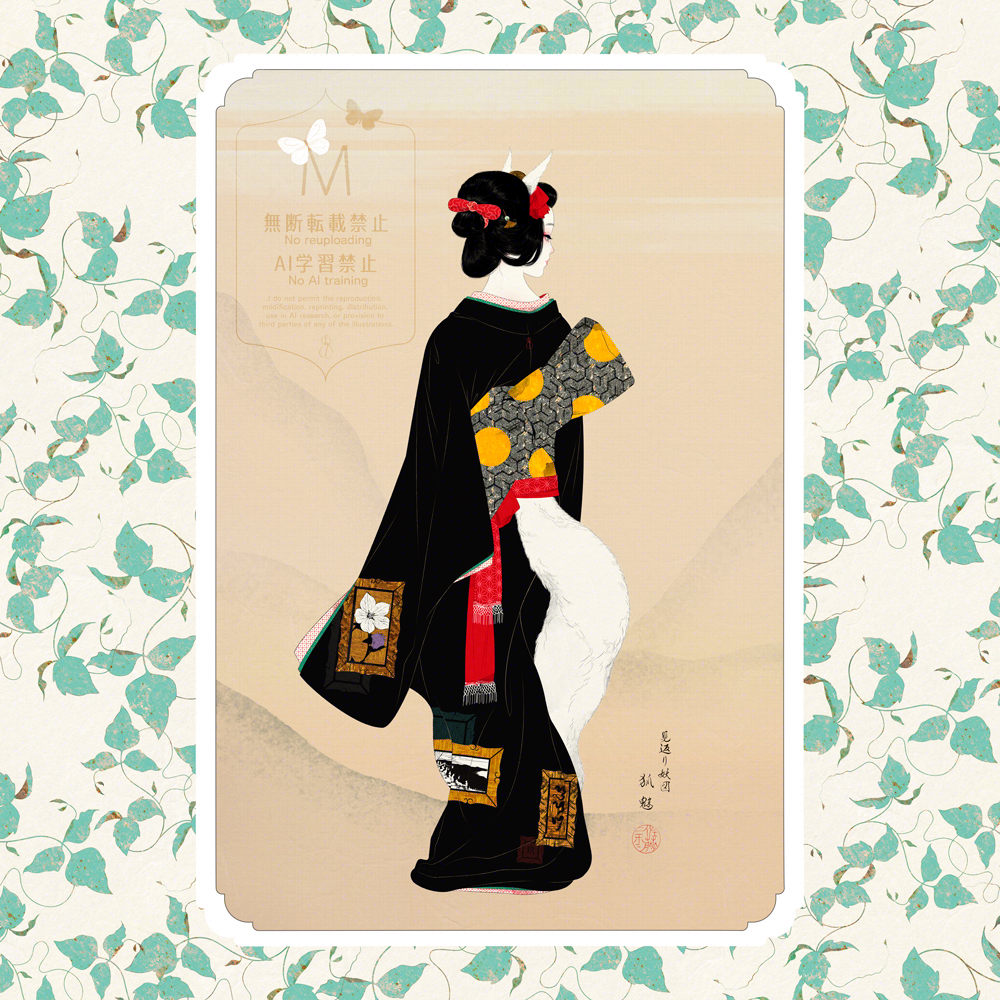
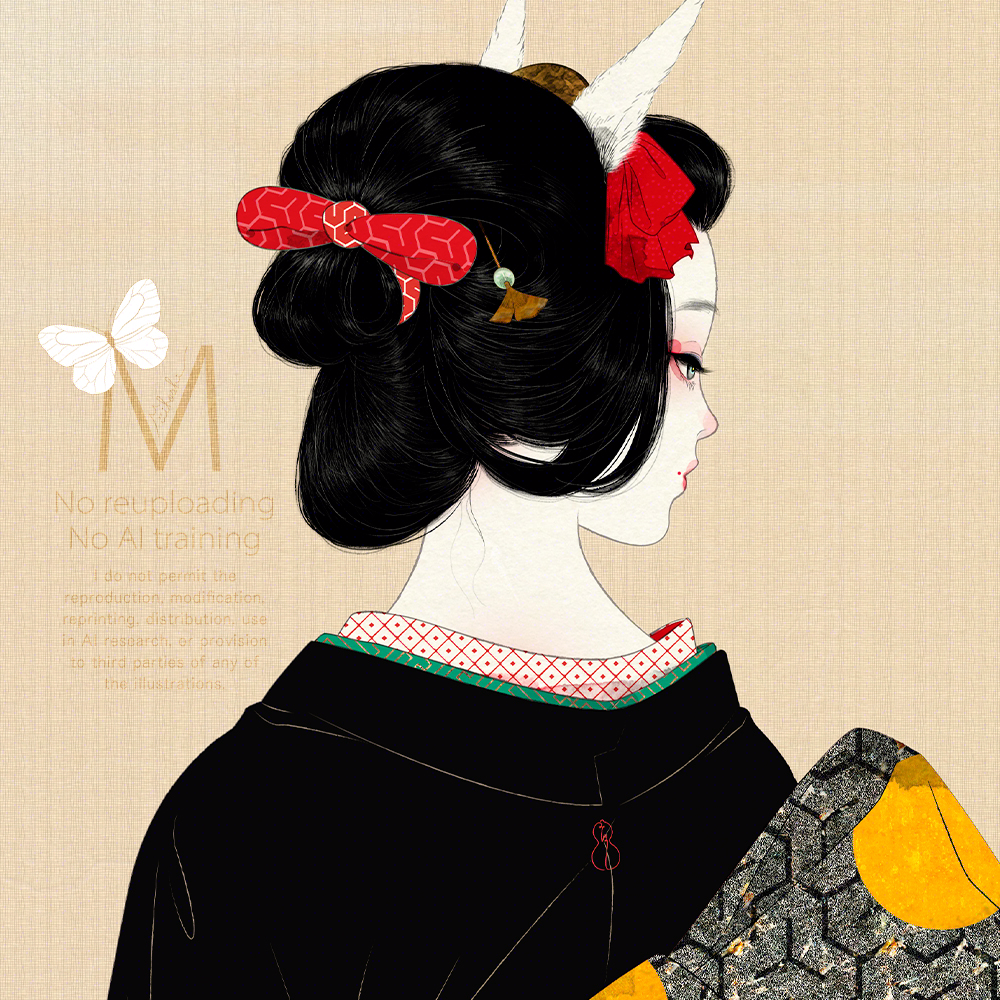

見返り妖図 狐魅(2024)
見返り妖図 狐魅(2024)
本作《見返り妖図 狐魅》は、日本美術における「見返り美人」の構図を基盤にしつつ、その視線性を反転させた創作作品。
「見返り」という構図は、もともと視線や感情を引き寄せるためのものですが、この狐魅は、あえてこちらを見ない。
「見返られている」のは、実は私たちの方なのかもしれない。
Mikaeri Yōzu: Komi (2024, Original Art)
Mikaeri Yōzu: Komi is a creative work based on the composition of the traditional Japanese Mikaeri Bijin, while deliberately reversing its sense of gaze.
The “looking-back” pose was originally meant to draw in the viewer’s eyes and emotions. However, this Komi intentionally refuses to meet our gaze. Perhaps it is not she who is looking back—but we who are being looked back upon.
Komi (狐魅) refers to a fox’s ability to shapeshift, or to a fox spirit that has transformed. In particular, foxes that take the form of alluring women are said to deceive men.
In folktales and popular stories throughout Japan, foxes—alongside tanuki—are often depicted as tricksters, capable of transforming into humans or other animals in order to bewitch and mislead people.